

Fergana Peace Forum: From the Line of Division to the Space of a New Central Asia
Bobur Bekmurodov, Chairman of the “Yuksalish” Movement
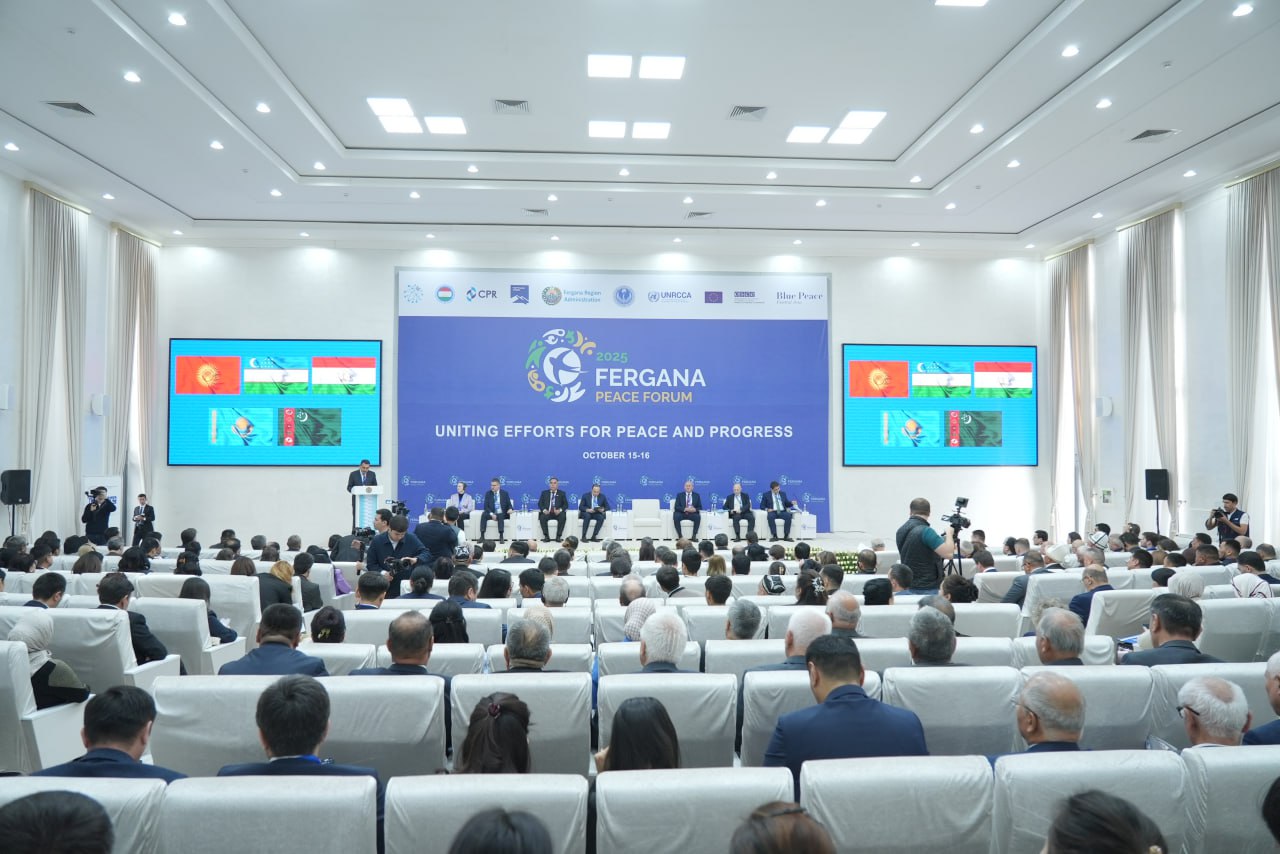
The Fergana Peace Forum, held under the slogan “The Fergana Valley: Uniting Efforts for Peace and Progress,” became an important milestone in shaping a new architecture of cooperation in our region.
Today, Central Asia is gradually transforming from a territory with a history of complex borders and disagreements into a space of trust, cooperation, and shared development.
This transformation is the result of the consistent and farsighted policy of the President of the Republic of Uzbekistan, Shavkat Mirziyoyev, who proposed the concept of a New Central Asia — a region of open dialogue, solidarity, and mutual support. The Forum in Fergana became a practical embodiment of this strategic vision.
The establishment of an atmosphere of good-neighborliness in the Fergana Valley reflects the positive processes taking place throughout Central Asia. In essence, this is the result of political will — a concentrated expression of the joint efforts of the leaders of all five countries to maintain security and stability in the region.
The event was attended by more than 500 guests, including over 300 participants from the countries of Central Asia, the CIS, Asia, Europe, and America.
Among the distinguished guests were Head of the UNRCCA Kaha Imnadze, EU Special Representative for Central Asia Edvard Stiprais, Director of the OSCE Conflict Prevention Centre Kate Fearon, Secretary General of CICA Kairat Sarybay, Deputy Secretary General of the SCO Khan Sohail, and UN Resident Coordinators in Kyrgyzstan, Tajikistan, and Uzbekistan.
An important feature of the meeting in Fergana was its inclusive nature — it was attended not only by representatives of government bodies, expert and academic circles, but also by civil society activists, including youth and women’s associations.
The presence of leading international peacebuilding organizations — such as the Ahtisaari Foundation, the Berghof Foundation, SIPRI, Search for Common Ground, Saferworld, and Acted — emphasized that Central Asia today is becoming a model for positive transformations, partnership, and mutual trust, where dialogue replaces confrontation, and cooperation becomes the foundation of stability.
Special significance was given to the Fergana Peace Forum by the active participation of civil society institutions. I am deeply convinced that it is precisely the interaction of civic initiatives, public organizations, and local communities that is becoming the key to building genuine trust and sustainable peace in our region.
State agreements and diplomatic steps are important, but long-term mutual understanding is born where people directly hear and support each other — at the level of neighbors, communities, and simple human relations.
In this context, the Yuksalish movement co-organized the fifth panel session titled “Cross-border Connections: Civic Initiatives and Civil Society in the Fergana Valley.”
This session became a vivid example of how civil institutions can be a driving force of regional cooperation, turning borders not into barriers, but into points of contact.
We see how local initiatives give rise to real stories of peace and trust — when residents of border areas themselves create space for dialogue, mutual assistance, and development. It is such bottom-up efforts that form the new philosophy of Central Asia — a region of open hearts rather than closed borders.
This session became a platform for open and sincere dialogue between representatives of NGOs, activists, and experts from Uzbekistan and Kyrgyzstan. The participants discussed how small-scale initiatives can strengthen trust between people and reduce the risk of conflicts in border areas.
At the forum, we also presented the results of our project “Peace in Society: Learning and Participation for Building Trust in the Jalakuduk District (Andijan Region).”
This experience clearly demonstrated how empowering women and youth, developing their legal and communication skills, helps create inclusive platforms for dialogue with local authorities. Such initiatives not only prevent the escalation of local conflicts but also foster a culture of participation and mutual understanding.
The Fergana Peace Forum confirmed that peacebuilding is not a one-time act, but a multi-layered process that requires the participation of everyone — from state institutions to grassroots activists.
The true value of the forum lies in the fact that it brought together at one table representatives of government, international organizations, experts, and civil society — on an equal footing, in open dialogue.
We see that borders in the region are gradually ceasing to be lines of division — they are becoming bridges of cooperation. This is the practical embodiment of President Mirziyoyev’s concept of a New Central Asia — a region where states do not compete but complement each other, where neighbors become partners, and neighborhood becomes an advantage.
It is worth noting the initiative of Kyrgyzstan and Tajikistan to hold the next Peace Forum on their territory. This is an important signal: the countries of the region not only support the idea of mutual dialogue but are also ready to take responsibility for its further development.
The address by Thomas Greminger, President of the Geneva Peacebuilding Platform — the organizer of the Geneva Peace Week — to the participants of the Fergana Peace Forum, drew wide attention among the public, policymakers, experts, and the international community.
Speaking to the forum participants from Geneva — the international capital where the annual Peace Week took place from October 13 to 17 of this year — T. Greminger expressed deep gratitude to Uzbekistan on behalf of the Geneva Peacebuilding Platform for its leadership in organizing this important dialogue on peace issues in the Fergana Valley.
According to him, the initiative of the Fergana Peace Forum is being implemented at an extremely important moment, simultaneously with the Geneva Peace Week, which “connects municipal and regional efforts to strengthen peace in Central Asia with global discussions on peacebuilding.”
“This visible link symbolizes that peacebuilding is both a municipal and a global responsibility, and that we can learn from each other’s experience,” he stated.
Moreover, the public’s attention was drawn to a flash mob that followed the example of the heads of the border regions of Fergana, Sughd, and Batken, who sealed their meeting with a demonstrative handshake. People in the three countries began to actively express their solidarity with the regional leaders through similar handshakes on social media.
It is noteworthy that this campaign was also joined by the heads of international organizations, including the Head of the UNRCCA Kaha Imnadze, Director of the OSCE Conflict Prevention Centre Kate Fearon, and EU Special Representative for Central Asia Edvard Stiprais.
This became a clear demonstration of the readiness of representatives of government agencies, civil society, and international organizations to consolidate their efforts in maintaining stability and ensuring sustainable development in the region.
Thus, we are convinced that the Fergana Peace Forum has become not just an event, but a foundation for a new stage of regional solidarity. We will continue to support initiatives aimed at strengthening trust, developing civil society institutions, and promoting a culture of peace in Central Asia.
The essence and content of the discussions held within the framework of the forum were reflected in the Communiqué.
This joint document stated that relations between the states of the region are of a strategic, comprehensive, and multifaceted nature. The countries are bound by ties of partnership and alliance, which require maintaining continuous and multi-level dialogue — between governments and parliaments, regions, and civil societies.
The Communiqué adopted at the end of the Forum, calling for the unification of efforts, will be circulated as an official document to the UN, OSCE, and other international organizations, which underlines the global significance of this initiative.