

Fergana Valley: Dialogue in the interests of Peace and Tolerance
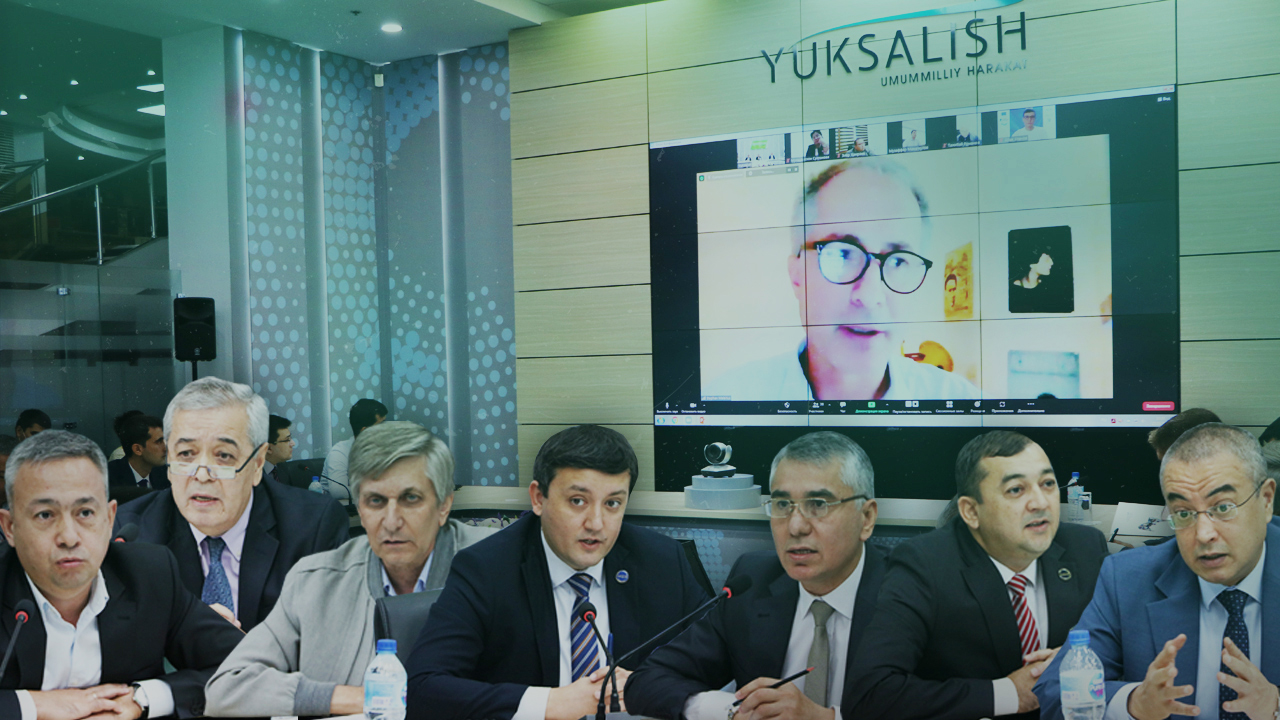
On September 27, 2021, a round table was held on the topic “Fergana Valley: dialogue in the interests of peace and tolerance”.
Local and foreign experts, specialists from government agencies and think tanks, representatives of the public, NGOs and other civil society institutions discussed aspects of strengthening humanism, developing equal and mutually beneficial relations between Central Asian countries, mutually beneficial cooperation and political settlement of issues in the Fergana Valley, as well as the development of a unified media strategy in the region as the basis of information security.
As noted, in the era of globalization, when there is a mutual penetration and interaction of cultures and religions, a tolerant attitude in society is especially relevant. It is formed on the basis of the recognition of universal rights and fundamental human freedoms. People are different by nature. And only tolerance can ensure the survival of mixed communities in the country, region, and the world. That is why the strengthening of the civil, interethnic, interfaith peace is defined as one of the priority directions of the Strategy of Actions in the field of ensuring security in the republic. The country's leadership is taking concrete steps.
- “The Fergana Valley was notable for its certain passionate saturation, and the population of the region was always quite restless, acutely perceived any manifestations of injustice,” says Rovshan Abdullayev, chief researcher at the International Institute of Central Asia.
- We see it today. And in the recent past, we have witnessed a keen perception of injustice. The Fergana Valley was the site of the largest civil unrest throughout history. This circumstance must always be taken into consideration. And We need to understand why this happened. Factors include population density, unresolved issues related to socio-economic aspects, and the religious factor. In addition, the events in Afghanistan are becoming one of the factors of potential threats today. This circumstance must always be taken into consideration. Afghanistan, like Central Asia, is a multicultural, multi-ethnic and multi-confessional country. If the interests of the multimillion non-Pashtun population are ignored here, then all this can aggravate not only the internal ethnopolitical, ethnosocial and ethnocultural situation in Afghanistan, but also the processes in Central Asia in general, in particular, in the Fergana Valley.
In order to support efforts in this direction, in March 2020, the project "Cross-border multilateral dialogue for tolerance and peace in Central Asia" was launched. The European Union-funded project is being implemented by a consortium led by the Konrad Adenauer Foundation in cooperation with three national partners – “Yuksalish” Nationwide Movement (Uzbekistan), the BIOM Ecological Movement (Kyrgyzstan) and the non-governmental organization Gender and Development (Tajikistan).
The project is aimed at increasing and strengthening the capacity of local civil society institutions, in particular, youth in promoting cross-border and dialogue to strengthen friendship, interethnic agreement, ethnic and religious tolerance, prevention of radicalism and extremist manifestations in the border regions of Uzbekistan, Kyrgyzstan and Tajikistan. One of the platforms for dialogue was the Center for Friendship, Interethnic agreement and Tolerance, created at the Fergana State University in February this year.
On the basis of the center, with the assistance of the “Yuksalish” Nationwide Movement, over 15 media trainings and seminars have been organized in a hybrid format with the involvement of experts for young people. As a result, youth groups "Heralds of Youth" were formed in each target country. The center continues to act as an educational and discussion platform for youth from target countries.
It was noted that on the basis of the prepared content analysis of the media, a media strategy is being developed, which will be jointly used in the three countries.
- The establishment of mutually beneficial cooperation and good-neighborly relations in Central Asia is the result of the volition, efforts and great diplomatic work of the heads of state of the region, - said the chairman of the “Yukalish” nationwide movement Bobur Bekmurodov. - Exactly, we see the leading role of the governments of the countries of the region. We are currently promoting the idea of contributing to these efforts, revitalizing civil society in order to support positive changes and initiatives proposed and implemented at the interstate level. The current regional project is precisely aimed at activating civil society, youth, governments, active citizens in the border regions. Within the framework of the project, we are interested in a constructive dialogue with state and public structures, expert and "think tanks", youth organizations and the population of the Fergana Valley, in order to discuss not only positive transformations, but also problems that need to be solved, including with the involvement of civil society. society.
Bakhtiyor Ergashev, director of the “Ma'no” Center for Research Initiatives, noted that the Fergana Valley, especially in the post-Soviet period, was characterized by the presence of serious local conflicts. So, in the period from 2011 to 2015, there were more than 70 conflicts of varying intensity. The main reason is the lack of land and water, issues of unsettled borders. But in 2017, with the arrival of the new leadership of Uzbekistan, a new stage of regional policy began. Uzbekistan stated that Central Asia is the main priority of the country's foreign policy, the establishment of partnerships and the formation of good-neighborliness around Uzbekistan and in the region.
The leaders of the countries in the format of the heads of the 5 states of Central Asia have not gathered since 2006. And in 2018 there was meeting, but not in full. In full they gathered in November 2019 at the Tashkent meeting without extra-regional players. Only from 2017 to 2020, there were 3 state visits of the presidents of Kyrgyzstan and Uzbekistan, 2 state visits took place between Uzbekistan and Tajikistan. The main emphasis in the breakthrough of these relations is made on the issues of border settlement.
“The main way to solve problems in the region is industrialization and the associated processes of accelerated urbanization,” says Bakhtiyor Ergashev, director of the “Ma'no” Center for Research Initiatives. - Without achieving these goals, all other solutions remain insufficient. One of the directions may be the formation of an integral comprehensive program for the industrial development of the Fergana Valley without dividing into national segments, and joint multilateral solutions. In particular, it seems appropriate to develop and approve, within the framework of informal summits of the heads of state of Central Asia, a comprehensive program for the industrial development of the Fergana Valley region, which creates conditions for the creation of joint industrial enterprises, the formation of chains of industrial cooperation in the processing of agricultural products, the building materials industry, and light industry.
Based on the results of the round table, proposals and recommendations were formulated for the further development of mutually beneficial cooperation between the three countries, including with the involvement of the population of border areas, and the establishment of a constructive dialogue between them.
Press Service of the Nationwide Movement “Yuksalish”