

Uzbekistan, with Its New Image, is Getting Globally Known As a Good News Maker
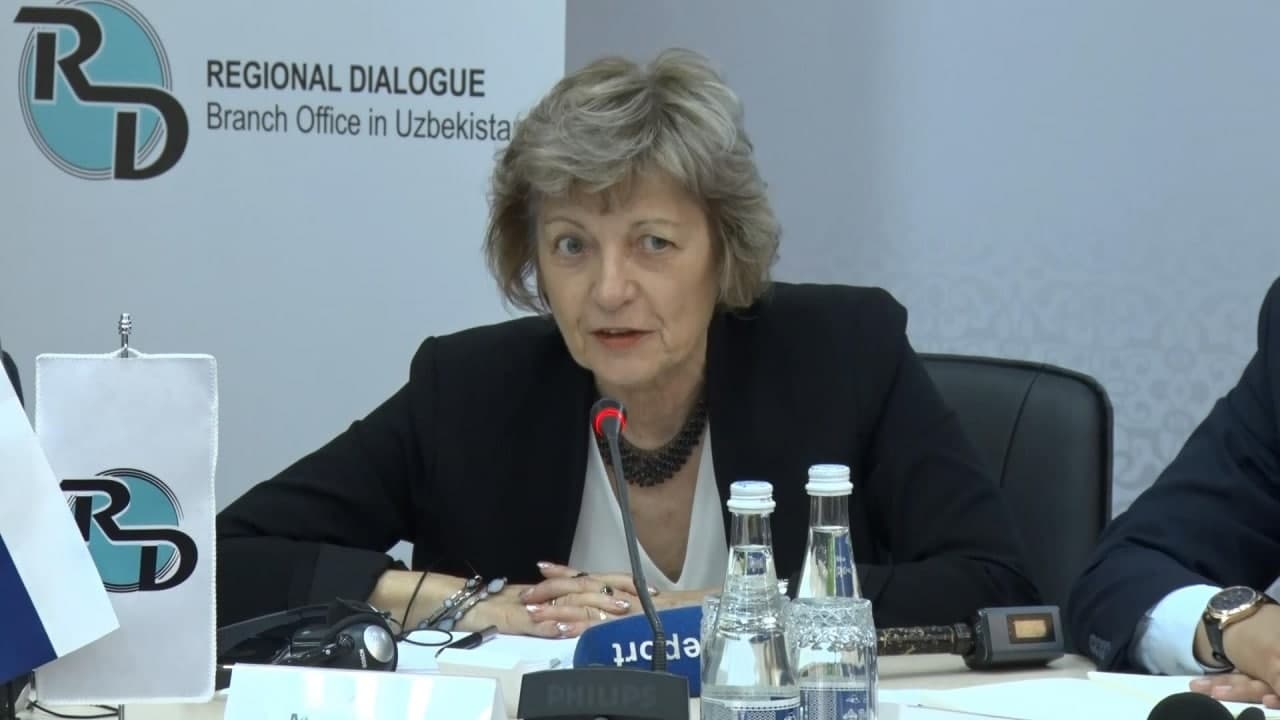
I have been engaged in the Uzbekistan’s transformation since 2003. I remember the unexpected excitement, when in September 2016, then the interim President Shavkat Mirziyoyev spoke those historic words that it was time for the government to serve the people, not the other way around.
My country - Slovenia, is home for a centuries old 2-million nation. 30 years ago, it also gained independence from the multi-ethnic communist federation after winning a 10 days’ war conflict - invaded by then the fourth strongest European Army of former Yugoslavia which the repressive regime at its very end used to brutally destroy its own peoples.
I can probably better comprehend the heavy legacy a newly independent state has to face. Having experienced the full scale of the war resulting from the breakup of supranational communist experiment, I have learnt to respect peace and stability as the most basic human right that we all need to organize our lives. Maybe this deeply emotional experience of the drama of my former country, witnessing thousands of lives ruined and lost with the curse of moments, helped me through the often-frustrating early years of working in Uzbekistan. Total misunderstanding by the international community which I was able to witness during the last years of breaking apart of former Yugoslavia, resembled the experiences of my first years in Uzbekistan and it did not make my job any easier.
General public and audiences of developed environments in established democracies tend to forget how steep and complicated the path to freedom is. They often forget it took centuries to stabilize their societies, and yet, the job is never done. When you are faced to build a state from scratch up, the task is even harder - when you lack experiences in running economy, foreign policy, financial and tax services, and most of all – lack resources to provide for the basic needs of your own people. Fear from chaos and disorder that comes with social and political unpredictability allows professionals trained in the former political establishment to take control with the main skills they learned in the legacy of the previous system – to repress freedom of speech and association, prevent individual rights, and submit them to the supreme control of imposed collectivism.
So, the first publicly pronounced statement by then interim President Shavkat Mirziyoyev, that it was time for the government to start serving the people and not the other way around, came as a promise of a new dawn for the country. With almost 35 million people where 65% of population is younger than 35, Uzbekistan holds a geostrategic position in the Central Asian region. As the most populous among its 6 neighbors, it marks the center of the crossing among the West and East, and the North and South. As such, it combines both the good and the less good of different cultures, built on its own thousands of years long historic background.
Our organization’s strong focus on the rule of law and judicial education derived from the assessment of the most urgent priorities to raise respect for the human rights and bring more fairness and transparency into the state system. So, we were impressed with the first decrees, passed in September and October 2016 – the first one pushing back omnipotent security services, and the second one announcing what it called “a radical reform” of the judicial system. Looking back towards the past five years, one has to admit that a lot has been done. True - these chapters remain to be fully and consistently developed with proper revision especially of the Criminal Code and Criminal Procedural Code, since it somehow stopped halfway. There is more transparency, less eagerness to incarcerate everyone, but the right for a strong defense of the plaintiffs still remains unresolved. Transition of the judicial system is a slow process, and probably one of the hardest, yet still the crucially important tasks for any society and a healthy political development - as many of the newly independent countries coming out of the communist system and moving towards democracy are well aware. The transition of judiciary cannot be done in a one-step action with declaration of independence and change of system. Therefore, I applaud the decision of Uzbekistan, to introduce a gradual process for the change of generations among judges – with a 5, 10 and life tenure of judges. As long as the appointment process is transparent and outside political manipulation and enforcement by the executive branch, or – even more dangerous - by any internal corrupt groups with their own political agendas, this is no doubt a better transitional solution. Most newly established European countries implemented a life term from the start on and still struggle with it. (Independence, fairness, and judicial wisdom is not something one can embrace overnight based on a decree or a newly written law after being exposed to decades of brainwash and emotional control by a total political subversion.)
De-bureaucratization and openness of the state services provided ground for a more vocal citizenship. Removing repressive force imposed by the state, enabled new motivation especially by talented young professionals. Sudden explosion of private media brought competition in trying to attract the audiences. This also helped the state-run outlets to finally start timely and more expediently provide the domestic and foreign audiences with information. Many Uzbek professionals, who chose to remain silent in the past, started to speak out, both to domestic and to the international public, explaining what Uzbekistan looks like or how it should be. Suddenly, Uzbekistan, which struggled with bad international reputation through its first decades, is not one of the main international culprits anymore. Instead, Uzbekistan with its new face de facto became the internationally noticed and widely recognized good news – nowadays so rarely seen in global headlines which gives it even greater importance.
And this is probably the biggest achievement of President Mirziyoyev and a list of many excellent diplomats in his team – they brought an entirely new approach to dealing with foreign policy, now also well present internally among its own people, as well as bringing entirely new breath to the international policy and relations. Comparing to almost arrogant, often hostile, and self-isolating period of Uzbekistan in its first two decades, Uzbekistan reached out to their neighbors with an entirely new energy. They proactively approached the international community in all 4 directions – to the West, North, East and – especially with the latest initiative towards connecting Central and South Asia – also to the South. And that is worth a global headline. Very few smaller countries become this important in their international ratings in such a short time. And to think that all this has been ongoing in spite of the global pandemic which paralyzed the world forcing most to deal with domestic priorities and evolving crises, is truly amazing.
The latest and probably one of the toughest task is the decision to eradicate corruption which demands not just political, but deep social and cultural reforms. The presidential decrees launched the first steps and were followed with an intensive campaign of building a legal awareness. Now we are all waiting for these decrees to materialize into laws with a wide support of both parliamentary chambers. Introducing transparency and asset declaration into the functioning of all three branches of government top down is what people – domestic and foreign - expect to start trusting the government – and the only real proof that there is real will for action behind the well-chosen public messages.
If continued with growing political and popular support that such actions need, this will start a new era also in strengthening the economy, attracting healthy investment, removing unnecessary gaps among the rich and the poor, introducing smart(-er) management of resources – not just those natural ones which Uzbekistan is rich with.
Because like in every nation and state - the most important resources are Uzbek people, both men and women, its young and older ones – and they deserve the best possible chance and leadership to fully develop all their talents and potentials and take their country and region safely forward towards the future.
Your neighbors and international community need you, Uzbekistan – so keep the hard work and nurture the spirit of this third renaissance - and good luck in the next decades!
Mjusa Sever, Regional Dialogue